National Archives

The Eastern European Mutt is going to…

…Philadelphia!

The 44th IAJGS International Conference on Jewish Genealogy takes place in person from 18 – 22 August 2024.

I’m presenting two talks, and participating on a panel:

The Alphabet Soup of USCIS Records: Meet the Foreign Address and Occupation Index (FAOI)

Not all records of the US Citizenship and Immigration Service (USCIS) are locked behind a government paywall! The US Holocaust Memorial Museum (USHMM) recently made the Foreign Address and Occupation Index (FAOI) available for research onsite. What’s the FAOI and how did USHMM come to have a copy of it?

The FAOI is a detailed, index card-sized form which gathered geographic location and employment information about immigrants to the United States. The FAOI data collection began in 1957, asking the immigrant to provide every address or location they lived at from 1940 onwards, as well as their trade or occupation, and any organizational memberships. Additionally, immigrants who arrived before 1957, but adjusted their immigration status after 1957, (e.g. became a citizen) can be located in the records. The facts listed in the FAOI make the cards an important research tool for tracing Holocaust experiences of survivors who came to the United States. The presentation will explain how the cards came to be, the information they contain, and how the FAOI can expand the knowledge and stories about survivors. The talk will also include details on how to access the cards, along with explaining some challenges in using the collection.

Stuck: Immigration, Naturalization and Repatriation in the WWI Era

Stolen passports, pleading letters and fake visas all appear in the US State Department’s Records of Foreign Service Posts. These documents tell harrowing tales of families separated by WWI, and the incredible lengths people went to in order to leave war-torn Europe and reunite with relatives in America. In the years before WWI, husbands immigrated to the USA, intending to send for their family after getting settled, but the outbreak of war turned temporary situations into lengthy separations. Other cases illustrate a short visit to see family in the Old Country morphing into a years-long ordeal. Both during and particularly after the war, the emergence of new European countries meant new rules and regulations controlling movement and emigration. Simultaneously, panic over an assumed mass influx of war refugees spurred the US Congress to pass restrictive laws that imposed quotas on would-be immigrants. This presentation highlights some of the incredible experiences families endured during this era and explains the records used to recount their stories.

The Future of USCIS Records: The Record Destruction Clock is Ticking, with Alec Ferretti and Rich Venezia

USCIS maintains millions of priceless historical documents, some of which can be accessed via the troubled Genealogy Program, while others require FOIA requests, or remain out of reach entirely. Panelists will provide a brief background on some of the records sets; why the documents are vital to knowing 19th and 20th Century US Immigration history; and what lies ahead. Panelists will:

• Update participants on advocacy efforts to push USCIS to transfer historical records in its custody to the National Archives;

• Discuss C-Files and the urgency of needing USCIS to change their status from temporary to permanent (destruction date: 2056);

• Discuss P-Files and the urgency of needing USCIS to change their status from temporary to permanent (destruction date: 2050); and

• Explain how legislative advocacy is necessary to implement these changes.

Genealogists and genealogy societies play a vital role in influencing Federal records management. The future of USCIS-held records remains in jeopardy if the community does not work to protect them. Participants will come away with new information and key action steps.

Will I see you in Philly?
The Eastern European Mutt is Going to…

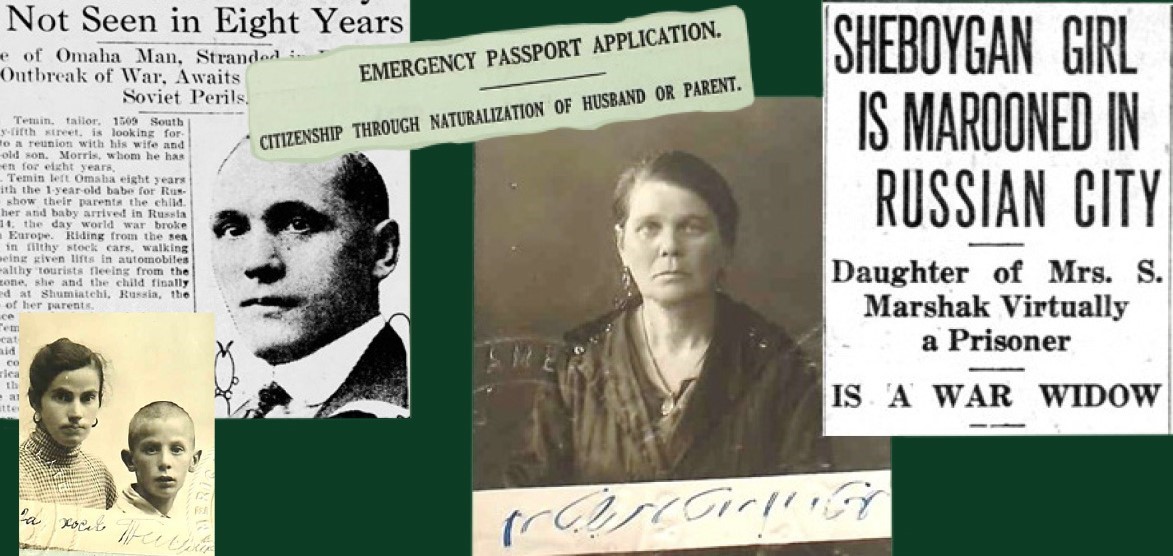
New York! Come see me live and in person at the Center for Jewish History on 17 March 2024 at 2pm.

In Stuck: Immigration, Naturalization and Repatriation in the WWI Era, I’ll tell harrowing tales of families separated by WWI, and the incredible lengths people went to in order to leave war-torn Europe and reunite with relatives in America.

In the years before WWI, husbands immigrated to the USA, intending to send for their family after getting settled, but the outbreak of war turned temporary situations into lengthy separations. Other cases illustrate a short visit to see family in the Old Country morphing into a years-long ordeal.

Both during and particularly after the war, the emergence of new European countries meant new rules and regulations controlling movement and emigration. Simultaneously, panic over an assumed mass influx of war refugees spurred the US Congress to pass restrictive laws that imposed quotas on would-be immigrants. 

Ripped from the headstone stories include stolen passports, pleading letters and fake visas – all documented in the US State Department’s Records of Foreign Service Posts.

For in-person registration: https://programs.cjh.org/tickets/stuck-2024-03-17
For Zoom registration: https://programs.cjh.org/stream-tickets/stuck-2024-03-17 (note: session will not be recorded)

This event is co-sponsored by the Jewish Genealogical Society, Inc., the Center for Jewish History, and Friends of Linda Cantor Z”L

USCIS Announces It Will Lower Genealogy Program Fees

Records Not Revenue Celebrates “Small Victory”

On 31 January 2024, US Citizenship and Immigration Services (USCIS) published a final rule which included decisions on the USCIS Genealogy Program fees. The final rule announced that requests filed online for a Genealogy Program Index Search will drop from $65 to $30. Similarly, Genealogy Program Record Requests filed online will now cost $30 per record. This is a 54% cut in fees to access the historical records held by USCIS. The rule goes into effect on 1 April 2024.

The final rule also explained that Genealogy Program records already digitized will be provided with the results of an Index Search, with no additional fee. Only AR-2 Forms and C-Files created before ca. 1944 have been digitized, and could be provided under this change. Visa Files, Registry Files, high-numbered C-Files, and A-Files all remain in paper form.

As a professional genealogist, one of the hats I wear is as a records access advocate – “records don’t save themselves” – to quote former USCIS historian Marian Smith. On behalf of RecordsNotRevenue.com, which I co-lead, I thank everyone who posted a comment to the Federal Register, or contacted their elected official. This accomplishment would not have happened without the groundswell of support. Grassroots advocacy works!

This ruling by USCIS is a small victory, and much work remains. According to the USCIS website, a Genealogy Program Index Search takes 245 days to process, and a Genealogy Program Record Requests can take up to an astounding 275 days. The rule does not tackle how the Genealogy Program will close the years’-long backlog; address customer service issues; or improve the poor quality of copies of paper files.

Additionally, USCIS must work with the National Archives and Records Administration (NARA) to transfer these historical records to NARA’s custody, where they belong. Due to years of records mismanagement, USCIS remains years behind in transferring its records. Millions of other immigration and naturalization records held by USCIS have yet to be scheduled for transfer, so their status remains in limbo.

In the coming weeks, RecordsNotRevenue.com will refocus its efforts on ensuring the spotlight stays on what happens next to these invaluable records, which tell the story of late 19th- and 20th Century immigration to the United States

Graphic adapted from https://www.federalregister.gov/d/2024-01427/page-6204

Help Save Access to Historical Immigration Records: Take Action with RecordsNotRevenue.com

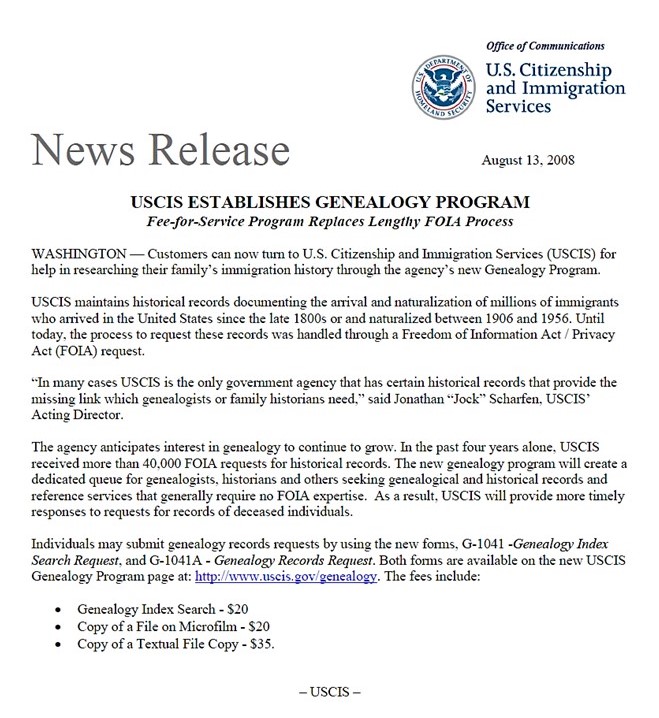
2008 Press Release announcing USCIS Genealogy Program

Researchers with an interest in immigration and naturalization might be familiar with US Citizenship and Immigration Service (USCIS, formerly the Immigration and Naturalization Service, INS) and the Genealogy Program launched back in 2008. What might be less well known was the reason for the creation of the program, which was to provide “a dedicated queue for genealogists, historians and others seeking genealogical and historical records and reference services that generally require no FOIA expertise. As a result, USCIS will provide more timely responses to requests for records of deceased individuals.”

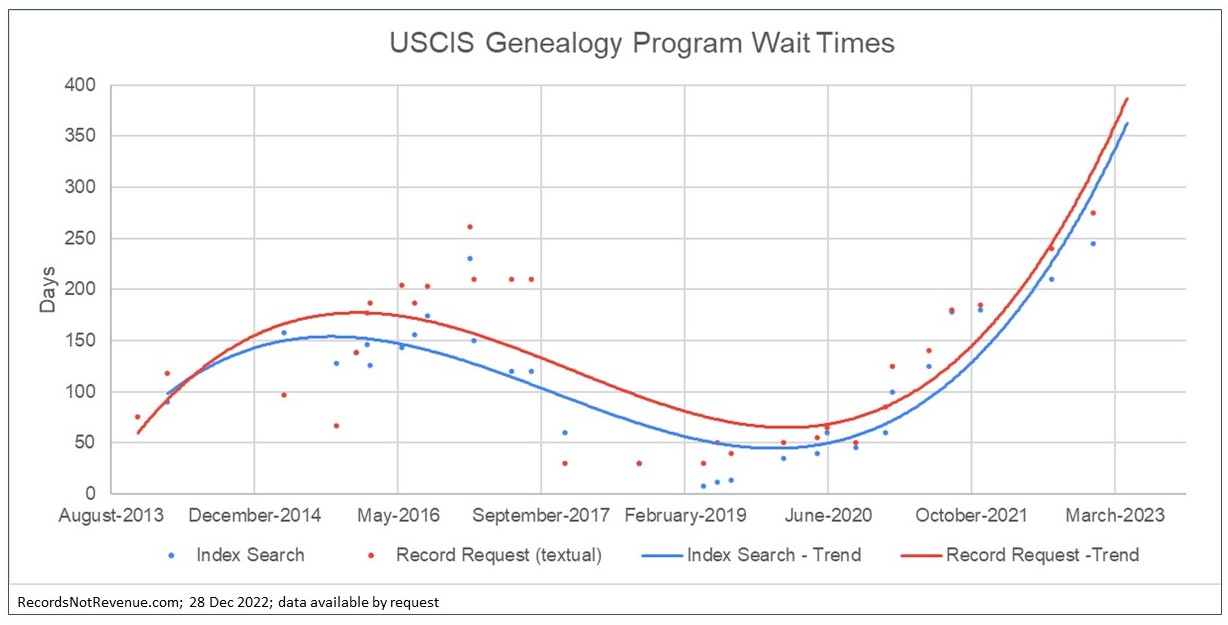
While response times ebbed and flowed during the first decade of the Genealogy Program’s operation, today’s reality demonstrates anything but a timely response. Currently, an Index Search request averages 245 business days for a result. The subsequent Records Request averages an astounding 275 business days to provide record copies.[1] That’s more than two years, start to finish, to obtain records once promised in less than 90 days.[2] Worryingly, more and more people receive correspondence telling them their file cannot be located. Some correspondence to Genealogy Program customers shows their files received extensive FOIA review, exactly what the creation of the program sought to avoid.

Trendline Graph demonstrating near-exponential wait times to receive historical record information from USCIS Genealogy Program

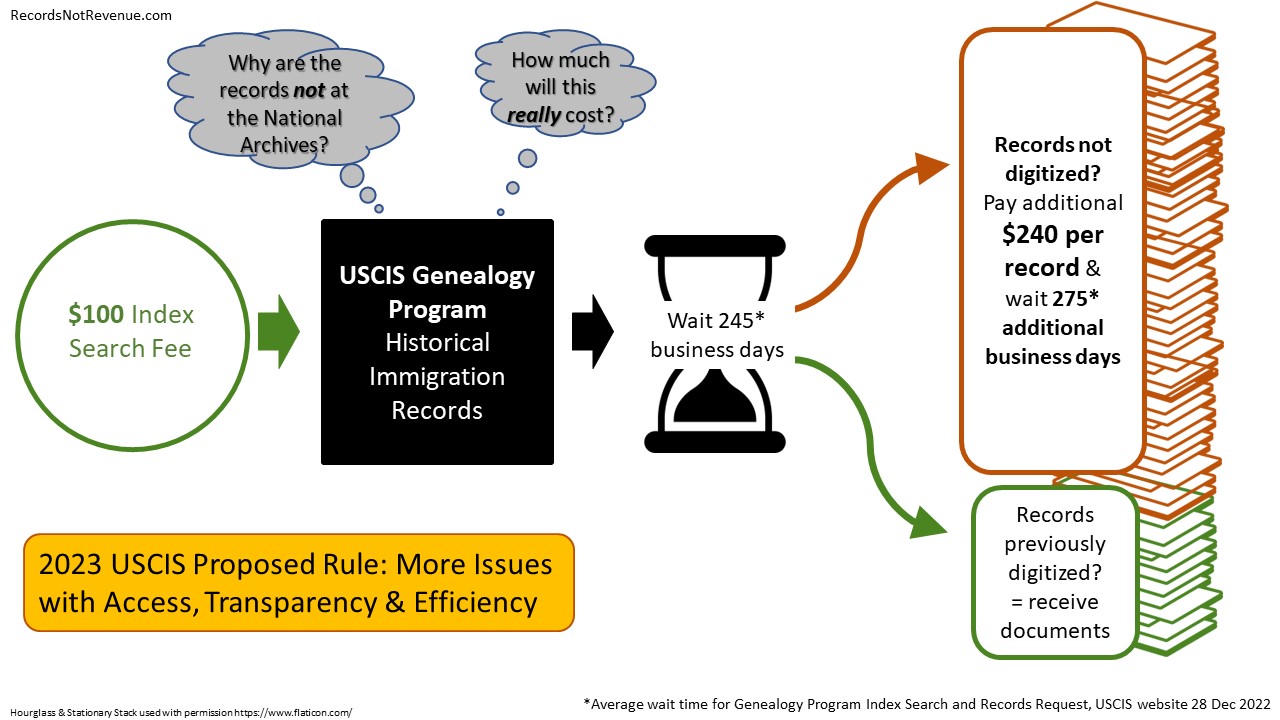
Now (January 2023) USCIS proposes changes to the fees for the Genealogy Program, as well as changes to the operational structure of the program. USCIS claims the need for enormous fee hikes reflects the cost to operate the Genealogy Program. It also claims the structural changes “might” improve the wait time to receive records, but only if records have been “previously digitized.”[3]

What the proposed fee hikes will do, if adopted, is certain: make access to historical immigration records unaffordable to most Americans. What the proposed structural changes will do, if adopted, is certain: mislead customers to think that they might receive all the records with one payment of $100. The reality, though, is that only one of the five document types serviced by the Genealogy Program is fully digitized.[4]

Back in 2020, USCIS promised to “transfer more files to NARA [National Archives] in the near future,” [5] yet only a small number of non-historic A-files have transitioned to NARA custody. Many historic files remain inaccessible on warehouse shelves because USCIS’ management of its historic records is quite simply, a mess. Over decades, USCIS put fixing this problem in the “too hard bucket” and now it expects customers to pay the price – up to 269% more than current fees.

These records should be at the National Archives, but it’s not as simple as calling in moving trucks. USCIS seems unwilling or unable to provide NARA the finding aids and index for the records in a usable format.[6] USCIS cannot simply dump records at NARA’s doorstep and expect NARA to fix the problem USCIS created. The resulting stalemate means it is virtually impossible to access records of 20th century immigration.

Speak out! RecordsNotRevenue.com provides all the details on issues of access, efficiency and transparency with the USCIS proposed rule. RecordsNotRevenue.com has suggestions on how to craft a comment, and shows you the steps to take. Join RecordsNotRevenue.com in telling USCIS to get their records management act together. Ask USCIS to present to the public a real plan to fix the two-year (plus!) backlog. Expect USCIS to coordinate with NARA to create a plan to transition these historical records in a manner that makes them serviceable to the public.

The comment period ends 6 March 2023. Visit RecordsNotRevenue.com and take action today!

Illustration explaining the proposed new fees and wait times for the USCIS Genealogy Program
This graphic illustrates the future if we don’t stop the proposed changes to the USCIS Genealogy Program.


[1] https://www.uscis.gov/records/genealogy/genealogical-records-help/request-status, last updated 28 Dec 2022; accessed 9 February 2023.

[2] https://www.uscis.gov/records/genealogy/genealogical-records-help/record-requests-frequently-asked-questions, accessed 9 February 2023.

[3] https://www.recordsnotrevenue.com/take-action

[4] The digitized series, known as Alien Registration forms (AR-2), came into use in 1940. Some Certificate files (C-files) are digitized. All other documents – A-files, Visa Files and Registry Files – would be subject to the $240 per document fee.

[5] U.S. Citizenship and Immigration Services Fee Schedule and Changes to Certain Other Immigration Benefit Request Requirements, published 3 Aug 2020. https://www.federalregister.gov/d/2020-16389/p-830, accessed 6 January 2023.

[6] https://www.archives.gov/records-mgmt/accessioning/finding-aid.html, accessed 9 February 2023; and MiDAS System schedule N1-566-06-002, see item 1(b). After the initial transfer, the NARA copy was supposed to receive periodic updates.

[7] The full text of the mission statement of the National Archives: https://www.archives.gov/about/info/mission, accessed 10 Feb 2023.


The Eastern European Mutt is going to…

…nowhere! Once again, I’m going nowhere. But I will be speaking at 42nd IAJGS International Conference on Jewish Genealogy, August 21-25, 2022.

Check out my live panel presentation, The Future of USCIS Records: The Problem is More than High Fees, with Alec Ferretti and Marian Smith, taking place on 24 August from 5:15pm – 6:15pm EDT.

We will discuss what led to this moment of limited access to historical immigration records and the unclear future regarding preservation. Genealogists and genealogy societies play a vital role in influencing Federal records management and participants will come away with new information and key action steps targeting both the USCIS Genealogy Program and the National Archives.

I also have an on-demand talk, The Alphabet Soup of Naturalization Records: Meet the P-File. This session introduces researchers of 20th Century immigration to the Petition File, a document that exists (or once existed) for immigrants who started the naturalization process between 27 September 1906 and early 1950. P-files, created by US Naturalization Examiners for every Petition for Naturalization filed, can provide a good deal of information on the applicant, sometimes information available nowhere else. These files, accessible only via a complicated FOIA request, are in the custody of USCIS, and scheduled for destruction in 2050.

These sessions are available to all conference attendees. The live panel will also be available as part of the conference recording package.

Will I see you online?

USCIS Wants to Hear From You! Tell Them “Give us the Records”

US Citizenship and Immigration Service (USCIS) currently holds millions of records that should be accessible from the National Archives. The USCIS Genealogy Program, begun with the best of intentions, no longer functions, resulting in a difficult, time-consuming and very expensive process for genealogists, historians and everyday researchers to access immigration records of the late 19th and 20th century. 

Previously, we fought back on the USCIS proposal to hike fees to access the records. Now, USCIS wants to hear from the public to identify barriers between their services and our satisfaction. The window of opportunity to tell USCIS about all the problems with the Genealogy Program closes on 19 May 2021.

Effective comments require specific feedback. Comments must address one or more of the 17 questions posed by USCIS. Comments must include reference to the Code of Federal Regulations. This sounds difficult, but it isn’t. The team at Records, Not Revenue (of which I am a part) outlined three steps to help you provide effective comments on the USCIS Genealogy Program.

If you are ready to take action now, click here. Remember, the deadline is 19 May 2021

If you want to know a bit more, continue reading….

USCIS focuses on citizenship and immigration services. Before it was USCIS, it was the Immigration and Naturalization Service (INS), and before that, the Bureau of Immigration. These agencies created heaps and heaps of records that provide important and interesting details on our ancestors’ lives.

The Genealogy Program at USCIS, created to help genealogists, historians and researchers access these old records, no longer effectively services the records nor the community. In fact, historical records and records management are not mentioned in the USCIS Mission Statement, nor is the Genealogy Program, historic records or records management listed in the USCIS Core Values.

Anyone who tries to order records from the USCIS Genealogy Program knows that the program currently exists as an afterthought, a burden, as illustrated in this info graphic

I experienced this process while working to obtain files on my grandfather. I submitted an index request, and then had to submit a FOIA request, after paying for the index search. Then, I received the documents, poorly scanned, redacted and delivered on obsolete technology. This is just one example of the challenges researchers face in obtaining the records.

The home for historic records is the National Archives and Records Administration (NARA). USCIS has signed legal agreements to transfer many of their historic records and accompanying index to NARA, but has so far failed to uphold these agreements.

There is a solution: USCIS must transfer the historic records (and accompanying index) of our ancestors, as they are legally bound, and do it without further delay. The records that are not subject to transfer and are open for research must be serviced by trained professionals who understand the complicated history of the agency and the records under its care.

Take action now. Submit comments on the USCIS Genealogy Program. The deadline is 19 May 2021. Share this information with friends, researchers, librarians, historians, genealogy societies and your elected officials. Don’t let USCIS hold our history hostage.

After Action Reports

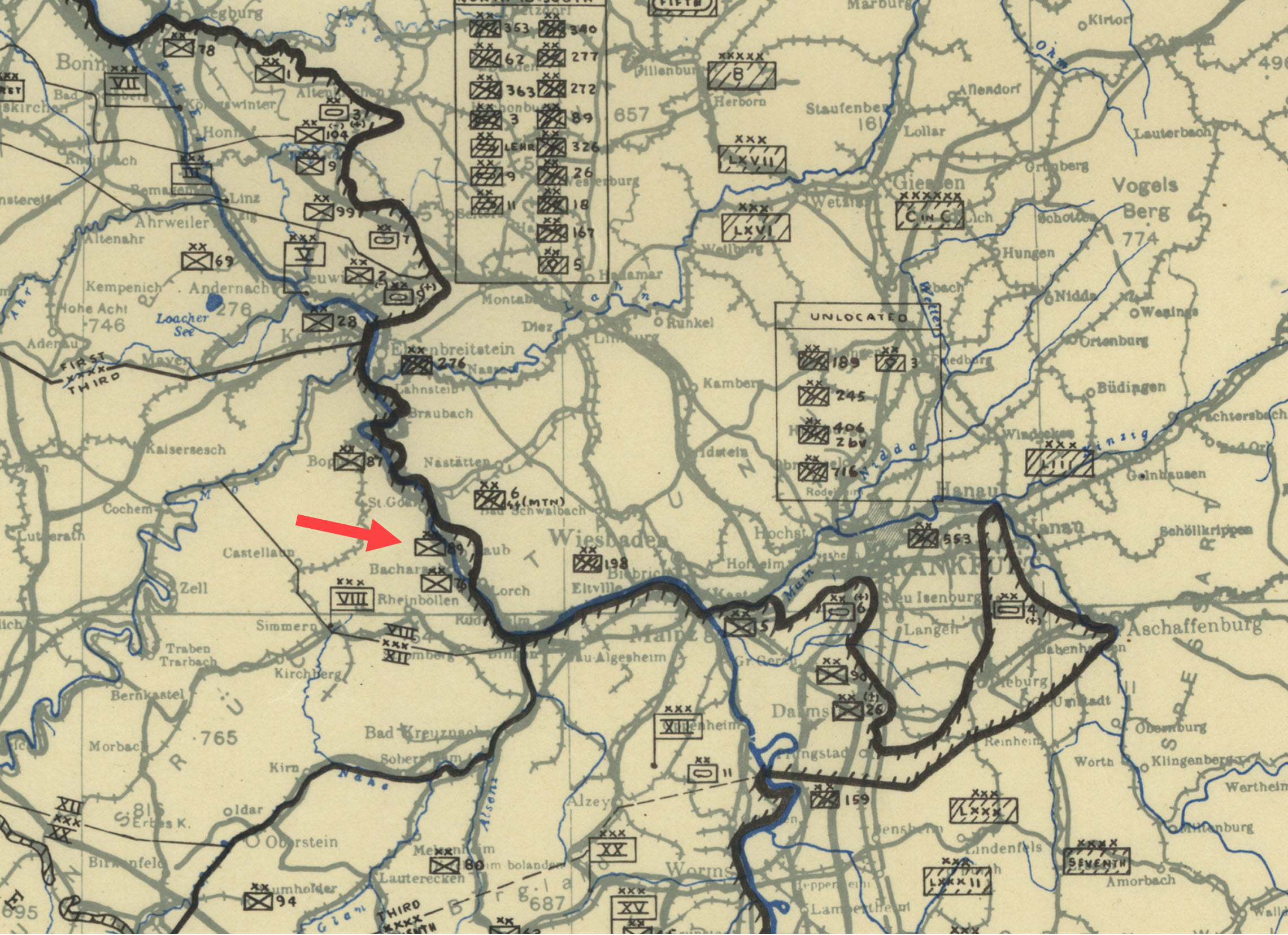
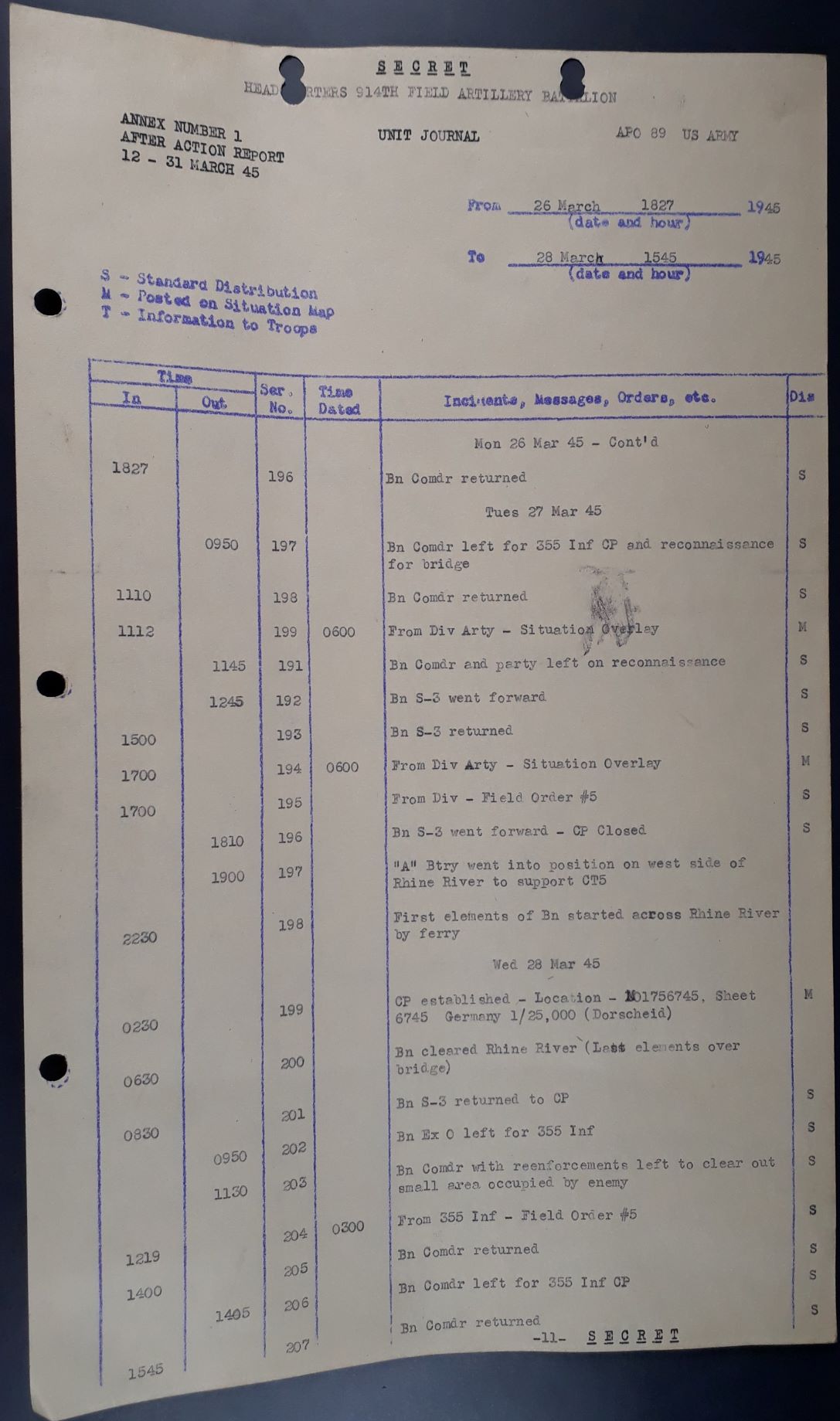
On 26 March 1945, at 0200 hours, the 89th Infantry Division began crossing the Rhine on its march eastward. Imagine the coordination between the divisions, brigades, battalions, batteries to make this happen. As the crossing began, the 914th Field Artillery Battalion provided support to the 355th Infantry Regiment. The crossings were made near St. Goar and Oberwesel. My great uncle Irwin Carl, a corporal in the 914th Field Artillery Battalion, was there. He was one of 88 men in Battery C, positioned 1500 yards east of Niederburg. 12th Army map web[1]

How do I have such detail, down to his exact position? After Action Reports.[2]

After Action Reports typically comprise a narrative, plus S-3 and S-2 Reports and a Unit Journal. The “S” stands for “Staff.” The “3” refers to “Operations,” and the “2” to “Intelligence.” The After Action report is a high-level narrative, written in the weeks after events. It does not give names. For the 914th Field Artillery Battalion, the 10 – 31 March 1945 report was submitted on 1 April 1945.

Reading through the After Action report for 24 – 29 March provides much detail on the Battalion, and each Battery within the Battalion. It details the locations, and exact timing of movements of troops – even the type and amount of ammunition expended.

From reading the primary source material, I know that the Rhine crossing took days – the 914th Field Artillery Battalion, Battery C started crossing at 0130 hours on 28 March 1945 – 48 hours after the first troops headed across – and they finished at 0400 hours on 28 March 1945.

Primary source materials, and drilling down into the details, tells the soldiers’ stories. These documents helped inform this blog post:

914 FA Bn After Action Rpt WWII cropped web    914 FA Bn After Action S3 Rpt WWII cropped web

914 FA Bn After Action Rpt WWII Unit Journal web

Many thanks to Eric S. Van Slander, Archivist at National Archives, College Park, for his assistance locating a mislabeled box, without which this research would not be possible. See also:

Next in the series… Liberation of Ohrdruf

[1] Allied Forces. Army Group, 1. E. S. & United States Army. Army Group, 1. H. (1944) HQ Twelfth Army Group situation map: Battle of the Bulge–France, Belgium, Netherlands, and Germany. 26 March 1945. [England?: Twelfth Army Group, to 1945] [Map] Retrieved from the Library of Congress, https://www.loc.gov/item/2001628569/, 26 March 2020.

[2] After Action reports are located in Record Group 407: Records of the Adjutant General’s Office, 1905 – 1981, World War II Operations Reports, 1940 – 1948. The 914th FA Bn: Entry (NM3) 427, File 389 – FA(914) – 0.3.

Bottle Recycling

Today, 16 January 2020, marks the 100th anniversary of the start of Prohibition, a 13-year experiment in honing the skills of bathtub brewers, bootleggers, counterfeiters, and illicit supply chains.

Max-on-right-bottle-wagon~1920s edited

A year after its ratification, the 18th Amendment went into force. It changed the trajectory of the Carl family business, bottle recycling. Bottle recycling was a good gig in St. Louis. The city was full of breweries and other businesses that relied on glass bottles. Wagons collected the empty bottles, which were sorted in a warehouse, and then sold back to the manufacturers. The Carl’s were green way before it was cool.

Prohibition took a big bite out of the bottle recycling business, so the family added distribution of “intoxicating liquors” to the portfolio, eventually leading to a stay in Leavenworth for one of the brothers, and a family rift that never fully healed.

Researching this part of my family history involved newspapers, St. Louis Police Archives, records of the FBI, records of the U.S. Circuit Court for the Eastern Division of the Eastern District of Missouri, and Leavenworth Federal Penitentiary, the latter two record sets via the National Archives in Kansas City.

Image: Carl Bottle Company horse-drawn wagon. Date unknown, likely late 19teens, early 1920s. Max Carl on the far right.

Records, Not Revenue

In a past career life, I coordinated diverse groups of non-profits and ran advocacy campaigns, harnessing their collective voice for positive change. When I departed the political sphere, I never thought that I’d return to those roots in order to help keep historical records accessible.

The U.S. Citizenship and Immigration Services (USCIS) Genealogy Program, keeper of some of the most essential records on 20th century immigrants, has proposed a 492 percent increase in the fees required to search their index and obtain historical records held under their purview. Many of these records should already be publicly accessible. USCIS is essentially holding them hostage, demanding individuals pay exorbitant fees to access documents of our immigrant ancestors.USCIS Genealogy Program Fee Hikes final v4

If approved, fees to access records will start at $240 and could cost up to $625 for a single file.  The fees are even more inexplicable when USCIS refers the majority of genealogy record requests to their Freedom of Information Act (FOIA) program for processing.  If these requests are FOIA requests, researchers should not be paying any fees other than standard FOIA fees.

Everyone should care about the issues involved, even if your research does not include these records. What can be done to one type of records can be done to others. You do not need to be a US resident nor citizen to submit a public comment. Any interested party can make their voice heard.

You can make a difference. Make your voice heard in 3 easy steps:

Step 1: Review the proposed rule here, and jump to the Genealogy Program section here. There’s a summary available at RecordsNotRevenue.com

Step 2: Write your comments, addressing the issues listed here or any issue you think is important. Be sure to mention the Genealogy Program. See these conversation starters for thoughts on how to begin. 

Step 3: Send your comments BEFORE 30 DECEMBER 2019 to

    • Federal Rulemaking Portal and refer to DHS Docket No. USCIS-2019-0010 and follow instructions for submitting comments on the Genealogy Program; and
    • Send a copy of your comments to your US Senators and Representative, and refer to DHS Docket No. USCIS-2019-0010. Tell them you care about preserving access to federal records!

Sign up to stay informed on this effort and learn more at RecordsNotRevenue.com

Amplify your voice! Please share this with genealogical societies, historical societies, and every family historian and researcher you know!

Sold for the Benefit of the Captors, redux

Back in February, I wrote Sold for the Benefit of the Captors, so the recent post on the National Archives Rediscovering Black History: Blogs Relating to the African-American Experience site might have seemed familiar to some. Let’s unofficially call it Sold for the Benefit of the Captors, redux.

I’ve had a chance to do some additional research on the document, and I’ve made some revised conclusions, along with developing a long list of questions. Take a look at the new version. I am really honored and excited to share the research process with posts for the National Archives. Get ready for an interesting, challenging exploration of the treatment of black prisoners during the War of 1812.