Liberty Enlightening the World

liberty-resized

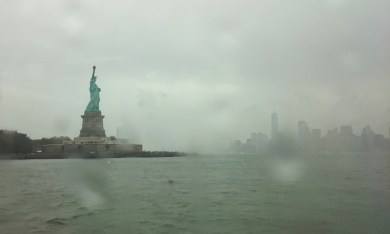
On a grey, cold day in October, I boarded a ferry outside the gates of Castle Garden, at the tip of Manhattan.  Looking out the ferry window, my parents and I could see a misty Statue of Liberty. From this vantage, the scene would have looked similar to one more than 100 years ago when three of my four grandparents[1]  arrived in the United States via Ellis Island.

The St. Paul, the Pennsylvania and the Kroonland carried my ancestors through the Narrows and within sight of the famous statue. After the ships passed quarantine inspection, they docked at the Hudson River piers and citizens and most 1st and 2nd class passengers disembarked. Immigrant steerage passengers passed through customs and then boarded ferries, taking them to Ellis Island for medical and legal inspection. They entered the main floor past stacks of luggage, and climbed stairs to the Inspection Room [2].

ellis-island-registry-room

Across this floor and through these lines walked

  • my maternal great-grandparents, my great-grandmother four months pregnant with her first child, my grandfather.
  • my paternal great-grandmother, shepherding four children under the age of 10, including my five-year old grandfather.
  • my maternal grandmother, three months old and bundled in the arms of her mother, along with her father and older half-sisters.

My maternal great-grandparents passed through inspection, and with $10 and a dream, headed into the cacophony of Suffolk Street and a tenement on the Lower East Side of Manhattan.

My paternal great-grandmother and her children already had train tickets to their final destination of St. Louis, and after passing inspection would have taken a ferry to the railroad, probably out of New Jersey.

My infant grandmother, her parents and half-sisters also had train tickets to their final destination, however they were detained for several hours over concern that the group might be L.P.C., or Likely Public Charge. They ate dinner (lunch) in the detention cafeteria before it was determined that the group had not $10 but actually $45 dollars and the capacity to continue the journey by train to St. Louis.

parents-in-registry-room

My parents in the Ellis Island Registry Room.

The visit to Ellis Island brought me and my parents back to the beginning of our immediate family’s life in the United States. Our Ellis Island immigrants comprised just 12 of the more than 12 million immigrants who passed through Ellis Island during its years of operation (1892-1954).

What is your immigrant story?


  1. Including my maternal grandfather in utero.
  2. Detroit Publishing Co., Copyright Claimant, and Publisher Detroit Publishing Co. Inspection room, Ellis Island, New York. [between 1910 and 1920] Image. Retrieved from the Library of Congress, https://www.loc.gov/item/det1994018383/PP/. (Accessed November 03, 2016.)
ROAD TRIP!

What do Albuquerque, Miami, Houston, Boston, Providence and Los Angeles have in common?

Genealogy Roadshow!

The PBS program that is “part detective show, part emotional journey” features incredible stories of everyday Americans. As a senior researcher for Genealogy Roadshow, I worked with lead genealogists Kenyatta Berry, Joshua Taylor and Mary Tedesco to dive deep into archives and other repositories for the evidenced needed to solve mysteries and provide the cast members with long-sought for answers.

More than 10,000 applications were sent in for Season 3, and can share your story and questions with Genealogy Roadshow here. Camera shy? Hiring a professional genealogist might be a better route for you. Check out my services and tips for working with a professional.
Season 3 begins airing on Tuesday 17 May at 8pm ET and runs through 28 June 2016. Check your local listings for your stations and time.

Tell Me A Story

Oral history is arguably the backbone of genealogy. “Every story has a kernel of truth,” I hear myself telling clients, “let’s figure out where the story started.”

This Thanksgiving, StoryCorps is promoting The Great Thanksgiving Listen, an effort to encourage interviews of people over the age of 65. While it’s geared towards teachers and high school students, StoryCorps developed an app that just about anyone can use.

With so many people joining family and close friends in the coming weeks, take time to ask someone to tell you a story. Some fantastic interview tips can be found here, and a more comprehensive resource page is here.

Question prompts I use include:
•    Find a group photo or a childhood photo with the person you are interviewing. As him or her about who else is in the photo, where it was taken, if it was a special holiday or celebration.
•    Building on that theme, ask your interviewee about their favorite holiday, special foods their parents or grandparents made. Ask about old traditions.
•    When was the first time they flew in an airplane? What was the make and model of their first car? Did they serve in the military? What was their first job?
•    Where did they go to school? Did they have a favorite teacher or subject to study?
•    Did they grow up in the city, or on a farm? Who else lived with them when they were children? Were other family members living nearby?

It might take more than one try. You might need to take a break, or do it a different time of day. Offer to also let the person interview you. Most importantly, sit back, and listen.

“Records from Letichev, including Medzhybizh…”

I read that line in an email on the UkraineSIG listserv, a part of JewishGen.org, and my mouth dropped open. Records from Medzhybizh? How do I get my hands on those?!

Researching Eastern European origins presents a variety of challenges: languages, shifting country borders, name changes, and records loss. There is also the myth of records loss – the Nazis destroyed everything – and then there are the true, devastating losses.

On 10 April 2003, a massive fire tore through the Kamyanets-Podilsky Archives, destroying or damaging more than 100,000 files, including “five the most valuable fonds of the history of Kamyanets-Podilsky Province since the end of the XVIII – the beginning of the XX century.”(1) The archives held the records of the area that comprised Podolia guberniya during czarist times.

According to an article in Avotaynu (2), “Five of the most valuable fonds were severely damaged:

  • f.226, Podolia State Chamber (Kazennaia Palata) (1796-1919);
  • f.228, Office of Governor of Podolia (1795-1917);
  • f. 112, Office for Peasant Affairs of Podolia Guberniya (1861-1919);
  • f. 678, Kamianets city office (1875-1920); and
  • f. 249, Office of Military Governor (1795-1845).

Destroyed or damaged records also included revision lists and Jewish metrical volumes. Since the 2003 fire at the Kamyanets-Podilsky Archives, researchers with ancestors from towns in the region have wondered if they might ever access or work with data relating to their relatives. My paternal grandmother’s parents were both born in Medzhybizh, so this has always had a great impact on the research for my family.

Today, with the support of JewishGen.org, I’m announcing a fundraising campaign to support the translation of records from Letichev and Uezd, including Snitkov, Derazhnia, Medzhybizh, Zinkov, Mikhalpol, Volkovintsy, Butsnevtsy. Yes, you read that right – documents for Letichev and the towns of Snitkov, Derazhnia, Medzhybizh, Zinkov, Mikhalpol, Volkovintsy, Butsnevtsy!

This project will translate and index 1221 images of records from towns of Lectichev and its uezd, including Snitkov, Derazhnia, Medzhybizh, Zinkov, Mikhalpol, Volkovintsy, Butsnevtsy. These images are from the 1829 and 1833 lists of families for conscription.

This opportunity to translate and make the dataset and documents originally from the Kamyanets-Podilsky Archives available for study is truly exciting news, and JewishGen.org needs your donations to make it a success.

Donate to the project here and look for the line that reads “Document Translation and Indexing Project for Letichev and Uezd”

We have a translator ready to start, so I hope you will join me in funding this important work.

(1) http://www.archives.gov.ua/Eng/Archives/ra22.php, accessed 27 August 2015

(2) http://www.avotaynu.com/nu10.htm, accessed 27 August 2015

Sold for the Benefit of the Captors, redux

Back in February, I wrote Sold for the Benefit of the Captors, so the recent post on the National Archives Rediscovering Black History: Blogs Relating to the African-American Experience site might have seemed familiar to some. Let’s unofficially call it Sold for the Benefit of the Captors, redux.

I’ve had a chance to do some additional research on the document, and I’ve made some revised conclusions, along with developing a long list of questions. Take a look at the new version. I am really honored and excited to share the research process with posts for the National Archives. Get ready for an interesting, challenging exploration of the treatment of black prisoners during the War of 1812.

Sold for the Benefit of the Captors

Surely many researchers dream of finding an unknown draft of a speech written by Abraham Lincoln; the doodles of JFK; the Ark of the Covenant; or whatever the movie National Treasure had thought was hidden somewhere in the vaults of the National Archives. The reality is that every archival file holds a hidden gem, for that information might be the key to solving a family’s mystery, or explaining their history. Sometimes, though, a document might be a bit more than a hidden gem. Let me explain.

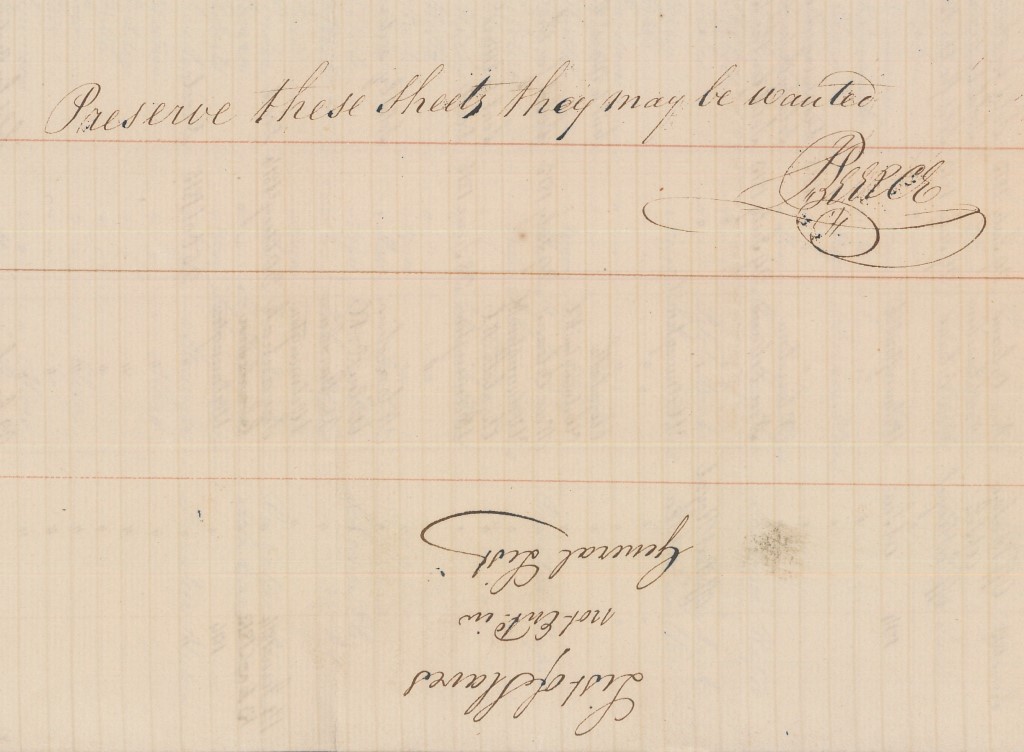
I’ve been researching British sailors captured from the merchant vessel Dolphin and held as prisoners during the War of 1812, on behalf of Bruce Murduck, a genealogist in Canada. I’ve spent a bit of time reviewing the Registers of British Prisoners of War 1812-15.* The registers are a bit of a bear. They are mostly in alphabetical order, but only by the first letter of the surname. The entries are not in date order, and there are entries also placed in an appendix, plus a continuation of the appendix as entries for some letters in volume two. Looking for a man’s name means checking through many handwritten lines, and to be thorough, reviewing nearly every page in both volumes. At the back of volume one, I came across a most curious, unbound, folded piece of a paper.

Copied at the National Archives, Washington DC

Copied at the National Archives, Washington DC

“Preserve these sheets they may be wanted,” signed by J Beerce, and then lower down on the page, and upside down, “List of Slaves not Entd in General List.”

I unfolded the paper, and a list of 47 men appeared, some marked as slave, and some marked Negro. There are eight columns on the page, untitled, but they seem to follow the pattern elsewhere in the register: name, description of person, vessel on which they were captured, vessel by which they were captured, date of capture, where captured, where they were held, and finally, the date of what happened to them next, and what happened.

For example, James Baptiste, Seaman of the Sloop Searcher, captured by the Schooner Rapid in June 1813 off the coast of Belize. Taken to New Orleans and on 29 July 1813, “Sold for the Benefit of the Captors.” Seven men were sold on 29 July 1813 in New Orleans: James Baptiste, Thomas Clarke, Bristol Clarke, Sharper Forbes, Ranter Forbes, Thomas Forbes and Prince William Henry.

Copied at the National Archives, Washington DC

Copied at the National Archives, Washington DC

“Sold for the Benefit of the Captors:” that would be to benefit the war effort, to benefit the United States. The fate of others was “Sold by Order of the District Court.” Some died. And for some men, the information is blank, unknown.

But these men are not unknown. This document, a folded piece of paper that nearly 200 years ago a J Beerce suggested be saved, offers a genealogist, an historian, an archivist the opportunity to make these men known.

Will you help me tell their story?

Certainly I’m not the first person to see this document, nor the first to write about it. But I do not think it is well known. I’ve brought this document to the attention of several archivists at the National Archives, and it was received with much interest. I can’t fit the entire list, or a high-resolution copy of it on this blog, but I would be happy to share. Just contact me. All I ask is that you keep me posted on your research and discoveries, and share your results.

*Registers of British Prisoners of War, 1812-1815, 2 Volumes. Record Group 45: Naval Records Collection of the Office of Naval Records and Library, 1691 – 1945. National Archives Building, Washington, DC.

Hitting the Road, without Leaving the District

What kind of project takes you to 23 states and 9 countries without leaving home?

Genealogy Roadshow!

Genealogy Roadshow tapes at Union Station in St. Louis.

Genealogy Roadshow tapes at Union Station in     St. Louis.

I had the good fortune to be part of the incredibly talented research team working on the second season of Genealogy Roadshow. Don’t look for me onscreen, though, the hot seats are filled by the lead genealogists: Joshua Taylor, Kenyatta Berry and Mary Tedesco.

I was able to attend tapings in St. Louis and Philadelphia, and look forward to seeing the final versions from those cities plus New Orleans when the season debuts on 13 January 2015. Check your local PBS station for times (8pm ET in most locations), and while you wait for the premiere, check out the trailer!

Hidden Gems

While “billions and billions” of genealogical documents are digitized and searchable online, an equal number reside in libraries, court houses and archives, waiting for a request or a researcher to don white gloves and unfold their secrets. Living in DC affords me the opportunity to assist researchers in other locales by pulling pension records from the National Archives or wedding licenses from the DC Courthouse. A recent request sent me to the Gallaudet University Library Deaf Collections and Archives, the “world’s largest collection of materials related to the Deaf.”

Certainly the hundreds of newspapers, bulletins, journals and other publications on the worldwide Deaf community would help any genealogist researching a family with Deaf members, however,the matriculation records and pupil statistics records housed in the archives offer all sorts of personal data on students who attended these institutions. I worked with the Pennsylvania School for the Deaf Applications, a record set that dates back to 1824, examining documents ranging from 1848 – 1863.

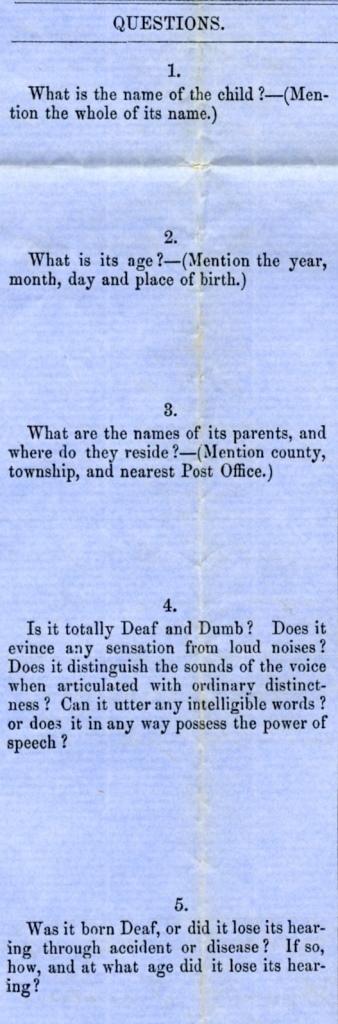
PA School for the Deaf application

Circa 1863 application questions

The applications are on tabloid-sized vellum paper, handwritten answers to pre-printed questions. The questions changed slightly over time, but of the applications I reviewed, the questions asked about the birth date of the applicant; information about his or her parents including financial status; information and sometimes names of siblings; questions about the demeanor of the applicant; and how the applicant became deaf, if not from birth. Really unique and valuable information!

In the case of the work I did, the family knew their ancestors had attended the Pennsylvania School for the Deaf. The Census also provides clues to finding out if there might have been Deaf ancestors in your tree. Beginning in 1830, enumerators asked the head of household about the number of “deaf and dumb” people in the household in three different age groups, and it also asked the same question regarding slaves and “colored persons.” In 1840, the same questions were asked and the same categories maintained. In the 1850 Census, the name and age of the person, along with the question “whether deaf and dumb, blind, insane, idiotic, pauper or convict” was asked. A question regarding the ability of a person to hear was asked through the 1880 Census.

Once one moves from the reaction to the lack of understanding of being Deaf relayed in the Census questions, a new avenue of research opens. Obviously, if the family lived in Pennsylvania, or perhaps Ohio or another nearby state, the first place to look would be the index to the Pennsylvania school records at Gallaudet Archives. The Archives also houses the pupil statistic records for Columbia Institution for the Deaf and Dumb, which became Gallaudet University. There were more than 30 schools for the Deaf in the US during the 1800s, meaning many more places to research, and hidden gems to discover.

Researching World War II Service: Beware the Unknown Unknowns

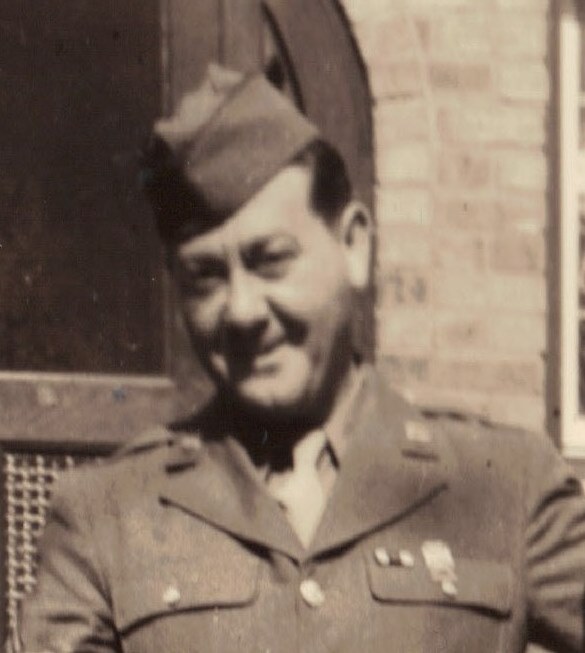
Irv Carl in WWII uniformMy great uncle Irwin “Irv” Carl served in the Army during World War II but that’s about all any family members knew. My search began with his enlistment data, and then I found a copy of his Application for a Headstone or Marker for a Military Veteran. That application matched the enlistment data, plus gave me a lot of new information. On most applications, you will find:

• Enlistment date
• Discharge date
• Service number
• Grade (rank)
• Medals
• Branch of Service, Company, Regiment and Division.

While these two documents were useful, I wanted to try and learn more, and placed a request for Irv’s military service record.

The service record request signaled challenges ahead: the 1973 fire at the National Personnel Records Center in St. Louis destroyed approximately 16-18 million Official Military Personnel Files, and 80 percent of Army records for personnel discharged between 1912 -1960. I was not surprised when I received a letter explaining that there were no records available for Irv, other than his final payment document. Something is always better than nothing!

The final payment roll confirmed the company, regiment and division. Or so I thought. I started to put together a report on Irv’s war experience based on the headstone application and final payment document, both of which placed him in “Headquarters Battery, 8th Infantry Division Artillery.” The 8th Infantry’s members wore a shoulder patch featuring an upward pointing gold arrow piercing a silver figure “8,” all on a blue shield.

I looked at dates, maps and locations, plotting where Irv might have gone or seen action. But then I received a box of photos from a relative. In that box were photos Irv had taken while in training and then in the European Theatre of Operations. A few images had information written on the back, some had identifiable landmarks, and others showed enough of Irv’s shoulder patch that the questions started.

If Irv was a member of the 8th Infantry Division, what was he doing wearing a patch for the 89th Infantry Division? The 89th Infantry Division patch is a distinct, stylized “W” inside a circle, black on khaki, nothing like the gold arrow of the 8th. There was no mixing up the two. Was he really a member of the 89th? If so, it would explain a few things: photos of Irv training in Colorado (the 89th trained at Camp Carson, Colorado), and some of the locations the 89th fought in Germany matched place names on the photos.

Why did the US military have the “wrong” information for the final payment roll and the headstone application? Actually, the information obtained in the two documents was accurate because at the end of World War II, Irv was briefly part of the 8th Infantry Division. Here’s why: when the war was over, the U.S. military in Europe needed to relocate more than 3 million service members, and get them back to a separation center close to the soldier’s final destination. It was a giant logistics puzzle. Attaching Irv to the 8th Infantry Division got him to Fort Leonard Wood, Missouri, a separation center about 130 miles southwest of St. Louis, Missouri.

Irv Carl with 89th Inf Div Patch

Irv Carl with 89th Inf Div Patch

Without the photos of Irv, and examining the shoulder patch, I would have identified his WWII service incorrectly. But at the same time, I would have been working with the documents and the evidence available to me. When researching the veteran in your family, beware the unknown unknowns.

On this Veteran’s Day, I’m doubling down on my effort to identify any of the people in the photos my great-uncle took, as well as share the photos in the collection of the Signal Corps at the National Archives. Follow this link and take a look.

There are more photos from the National Archives to scan and add to the collection, and the next step for the family photos is to geo-locate them. I also need to start digging through World War II Operations Reports to see if I can determine the company and regiment to which Irv was attached. Much more research ahead!

Going to NIGR, not Niger

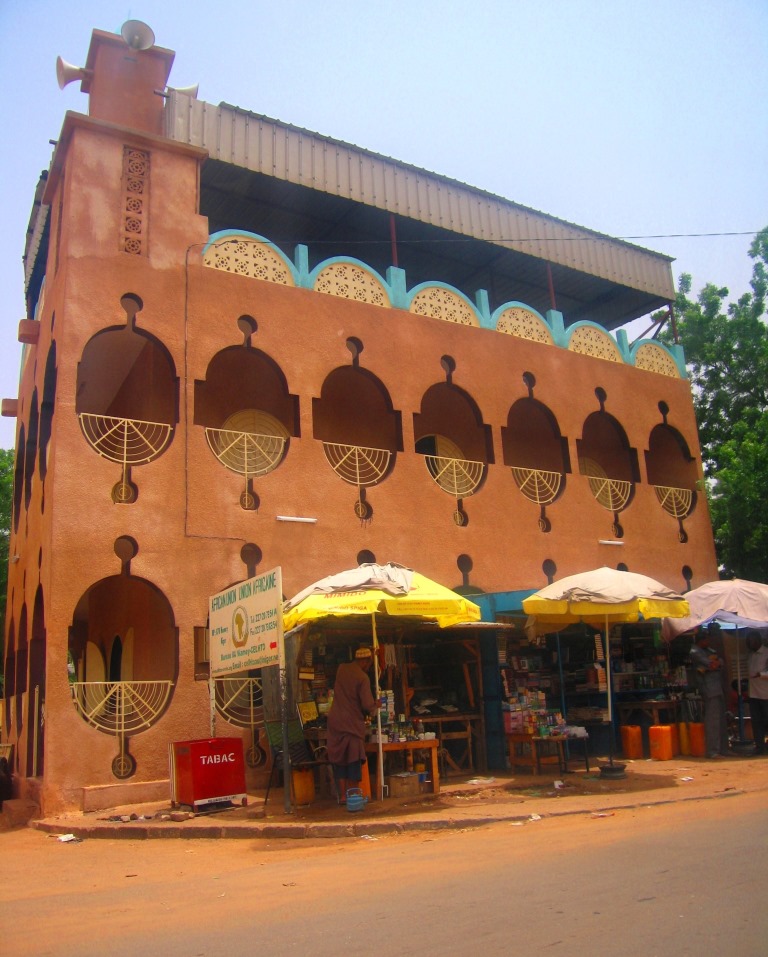
Street in Naimey, Niger

Not the corner of Pennsylvania and 7th Sts NW

Things are confusing in our household at the moment. One of us is traveling in Niger for work, and the other is attending the National Institute on Genealogical Research, known by its acronym, NIGR. The Nigeriens (not to be confused with Nigerians, from Nigeria) prefer a French pronunciation of the country name, something along the lines of “nee-ZHER,” while the Institute goes by “NYE-jur.”

Now that I’ve cleared up pronunciation, the more important information is, what is NIGR? NIGR is an intensive program offering a series of lectures plus on-site examination of federal records at the National Archives.

The syllabus includes: court martial records, pensions and other military records; public and private land claims; the Freedmen’s Bureau and Southern Claims Commission; American Indian research; using photographs and maps for genealogy; a lecture on documents relating to pirates and privateers; plus sessions in the Library of Congress, the Daughters of the American Revolution Library and with the US Customs and Immigration Service.

Whew. It’s going to be a brain-bursting week. I can’t wait.